
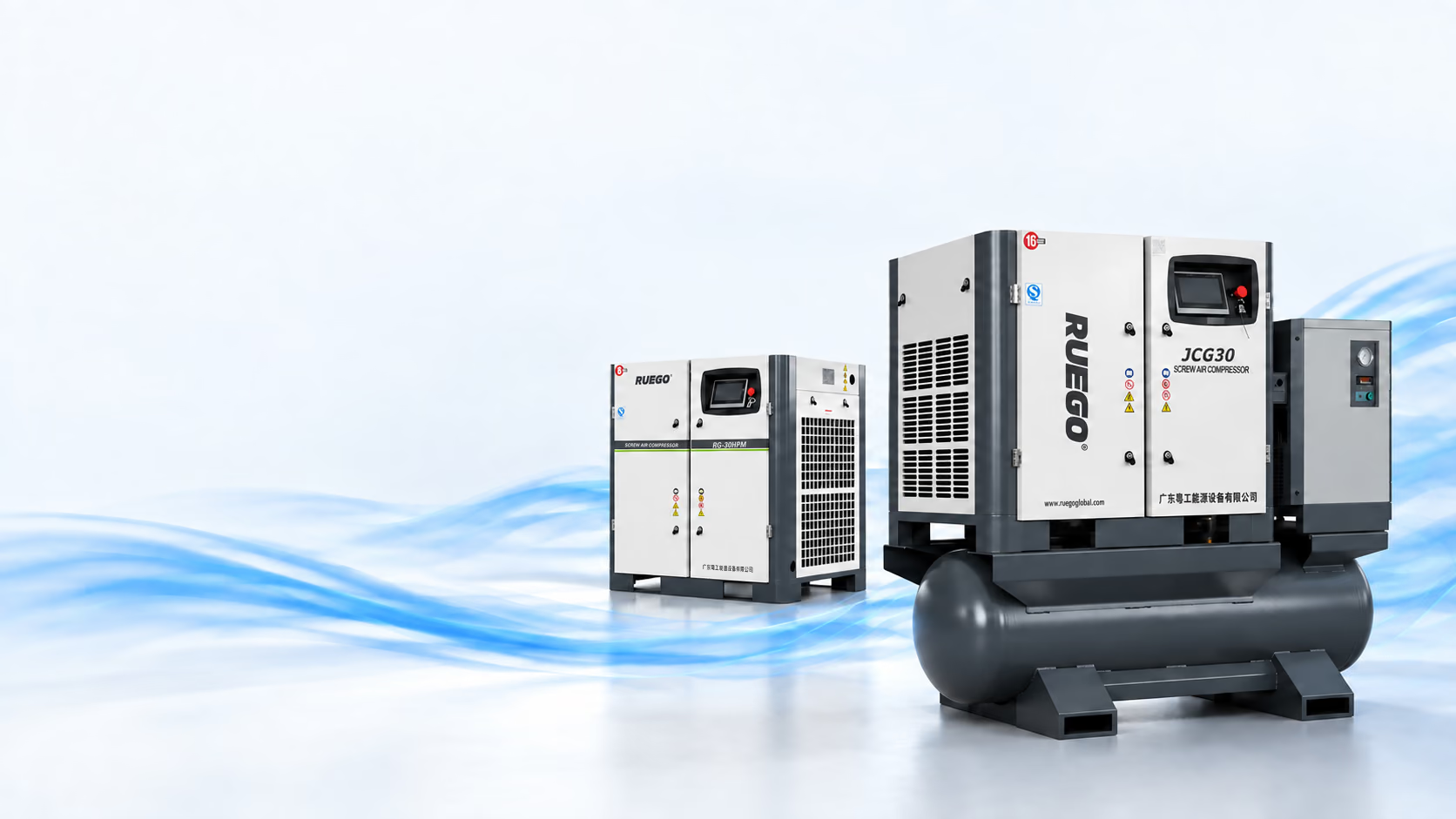
AIR SUPPLY THAT FOLLOWS DEMAND
Variable Speed Rotary Screw Air Compressors
Compare RUEGO variable speed rotary screw air compressors for changing air demand. Explore configurations and get help selecting the right system.
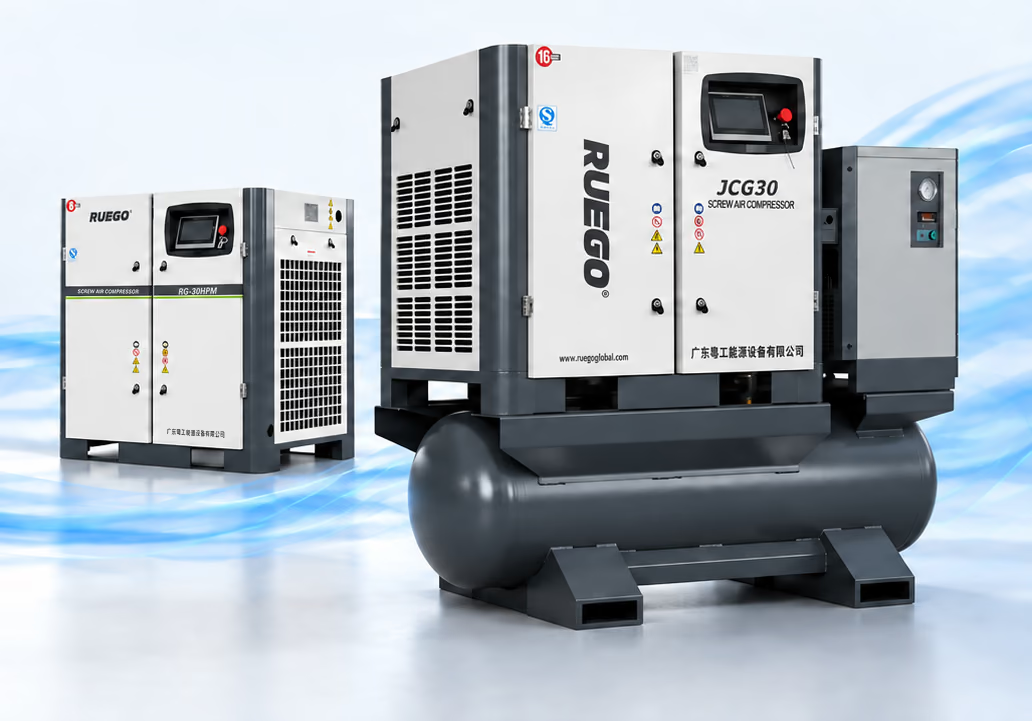
EXPLORE THE RANGE
Explore RUEGO VSD Screw Compressors
Compare the package, working pressure and air delivery. Open the product details for model specifications and configuration options.
THE OPERATING PRINCIPLE
How Variable Speed Screw Compressors Work
A variable speed screw compressor uses pressure feedback and PID control to adjust motor speed smoothly. It speeds up when air demand rises and slows down when demand falls, matching output to actual use.
This reduces repeated loading and unloading, cuts wasted electricity and keeps pressure steady. Tighter pressure control also supports a lower operating pressure while meeting equipment needs.
01
Sense Pressure
A sensor tracks pressure changes in the air system.
02
Adjust Speed
The controller signals the drive to change motor speed.
03
Match Air Output
The screw airend delivers more or less air as demand changes.
MATCH THE DRIVE TO YOUR DEMAND
Variable Speed vs. Fixed Speed Screw Compressors
Variable speed compressors match air output to changing demand, reducing unloaded energy use and keeping pressure steady. Fixed speed compressors suit sustained, near-full-load operation. Compare how each controls airflow, uses energy and works in a multi-compressor system.
FROM AIR REQUIREMENT TO EQUIPMENT
Choose the Configuration Around Your Site
01 / SIZING
Required Pressure and Airflow
Start with pressure at the tools, then account for dryer, filter and pipe losses. Size for peak demand and check minimum demand against the compressor’s operating range. Compare air delivery at the required pressure before choosing HP.
02 / LAYOUT
Standalone, Tank-Mounted or Integrated
Use a standalone unit with your existing air treatment, a tank-mounted package for compact storage, or an integrated system that combines compression, storage, drying and filtration. Allow room for cooling and service access.
03 / COMPRESSION
Single-Stage or Two-Stage
VSD control can work with either arrangement. Two-stage compression raises air pressure in two successive steps. Compare complete-package performance at your required pressure and flow.
Explore Two-Stage Screw Compressors →04 / INSTALLATION
Power Supply, Cooling and Controls
Provide the site voltage, phase, frequency and available electrical capacity. Review ventilation, ambient temperature, dust and moisture, plus control compatibility when connecting to other compressors.
PLAN THE COMPLETE AIR SYSTEM
Match Your Application and Air Treatment
CNC and Machining
Check how many machines run together and the pressure needed at clamps, tool changers and other air users.
Packaging and Automation
Map the production cycle and short bursts of air use. Set moisture and contamination limits for the equipment and process.
Factory Air Networks
Review shifts, existing compressors and remote use points. Include pipe losses and receiver capacity when planning central supply.
Storage, Drying and Filtration
A receiver buffers short demand peaks. A dryer controls moisture vapor; filters target particles and oil aerosols. Select treatment for flow, pressure, inlet temperature and required pressure dew point, with drains to remove condensate.
For oil-sensitive processes, define the required air quality before choosing the compressor and treatment package.
LET’S SIZE YOUR AIR SUPPLY
Get Help Selecting a VSD Screw Compressor
Tell us what your equipment needs. We’ll help you compare the compressor, storage and air treatment options.
Get Selection SupportWhat to Share
- Application, pressure and airflow—or your equipment list
- Shift pattern and changes in air demand
- Power supply, site conditions and air quality requirements
For an upgrade, add the existing compressor details and any operating records.
OEM and Project Configuration
Discuss your logo, colors, nameplate, packaging and manuals, together with the electrical and system configuration for your project.
BUYER QUESTIONS
Variable Speed Screw Compressor FAQs
What is the difference between VSD and VFD?
VSD is the broader term for variable speed control. A VFD changes the electrical frequency supplied to an AC motor to control its speed. In screw compressor listings, both terms commonly describe a compressor with electronic speed control.
Does every VSD compressor use a permanent magnet motor?
No. Variable speed control can be paired with different motor technologies, including induction and permanent magnet motors. Compare the motor and drive configuration shown in the product details.
Can a VSD compressor work with my existing air system?
Yes. Match its pressure, capacity range and controls to the existing equipment. In a multi-compressor system, a VSD unit can handle demand changes while fixed-speed units supply the steady load. Check receiver capacity and air treatment at the same time.
What power supply details should I provide?
Share your site voltage, phase, frequency and available electrical capacity, along with any required certifications. We use these details to match the compressor’s electrical configuration to your site.
What maintenance does a VSD screw compressor require?
Follow the model’s service schedule for filters, lubricant and separators where fitted. Keep coolers and cabinet ventilation clear, check condensate drains, and review controller alarms and running temperatures.