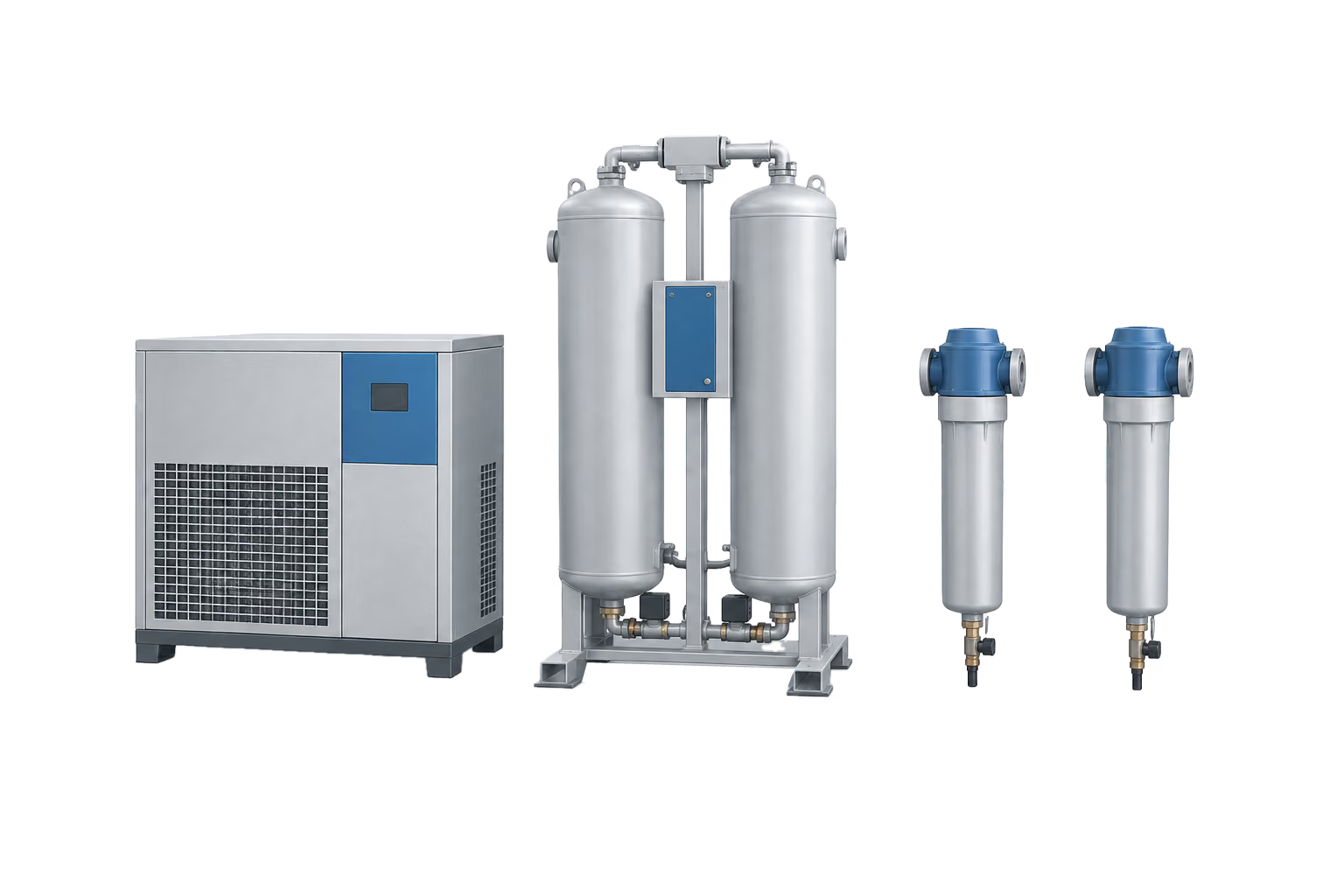
Industrial air treatment

Compressed air dryers

Refrigerated and desiccant air dryers for industrial compressed air systems. Match drying technology to your airflow, operating conditions and process needs.

Why air drying matters

Why Use a Compressed Air Dryer?

Moisture in compressed air can cause rust, damage air-powered tools and leave defects in painted surfaces. These problems can mean more repairs, rejected products and unexpected stops in production.

A compressed air dryer removes water vapor from the air before it reaches your equipment or process. This helps protect equipment and maintain product quality. Different applications need different levels of dryness, so the dryer should be chosen to suit how the air will be used.

Common Drying Technologies

Refrigerated drying

Cools the air so water vapor condenses, then separates and drains the liquid.

Desiccant drying

Uses an adsorbent to capture water vapor; the desiccant is regenerated for reuse.

Membrane drying

Passes compressed air through selective hollow fibers that allow water vapor to permeate through their walls.

Compare the essentials

Refrigerated vs. Desiccant vs. Membrane Air Dryers

Refrigerated dryers suit everyday factory air. Desiccant dryers provide deeper drying for moisture-sensitive processes. Membrane dryers offer compact drying at individual machines and other points of use. Compare the dew point, air demand and running requirements below.

Compare drying performance and operating needs
What to compareRefrigeratedDesiccantMembrane
Typical pressure dew point+2ยฐC to +10ยฐC.โˆ’40ยฐC for standard deep drying; โˆ’70ยฐC for more demanding processes.+10ยฐC down to โˆ’40ยฐC.
How it removes moistureCools the air to condense water vapor, then separates and drains the liquid.Captures water vapor on a desiccant, which is regenerated for reuse.Passes water vapor through hollow-fiber membranes and carries it away with a dry-air purge.
Typical applicationsGeneral factory air, pneumatic tools and indoor production lines.Moisture-sensitive processes, instrument air and pipework exposed to freezing temperatures.Individual machines, instrument cabinets and smaller point-of-use air supplies.
Energy and air useUses electricity for refrigeration. The drying process does not require purge air.Uses purge air, heat or recovered compressor heat to regenerate the desiccant.Uses part of the dry air for purging. Basic membrane modules need no electrical supply.
Key selection pointA practical choice above freezing; conventional refrigerated dryers cannot deliver sub-zero pressure dew points.Choose the regeneration method around air consumption, available heat and operating hours.A lower outlet dew point reduces usable airflow. Size for the dry-air outlet flow after purge.
Routine careClean cooling surfaces and keep condensate drains working.Service valves and filters, and replace desiccant as its drying capacity deteriorates.Maintain upstream coalescing filters to protect the membrane from oil, particles and liquid water.

Pressure dew point is the temperature at which moisture starts to condense at line pressure. Choose a target below the lowest downstream temperature and low enough for the process.

From requirement to selection

How to Choose a Compressed Air Dryer

Your dryer needs to deliver the right pressure dew point for your process and handle the airflow from your compressor. The amount of air it can dry changes with inlet pressure, inlet temperature and room temperature. Use the modelโ€™s correction factors to check its capacity under these conditions.

Get Help Choosing Your Dryer โ†’

01

Set Your Dew Point

Pressure dew point tells you how dry the air is. Choose a target that meets your equipment needs and stays below the coldest temperature in your air lines. Drying beyond what your process needs adds cost.

02

Check How Much Air You Need

Size the dryer for the highest airflow it will handle. Use airflow figures from your compressor data sheet, not just its motor power. If the dryer uses some dry air to remove moisture, allow for this extra air use too.

03

Check Temperature and Pressure

Record the air pressure and temperature at the dryer inlet. Include the hottest room temperature expected in summer. These conditions affect how much air the dryer can treat. Use the selected modelโ€™s sizing data to check that it can meet your needs.

Product range

Explore RUEGO Compressed Air Dryers

Browse our refrigerated and desiccant air dryers in one place. Compare the series below, or send us your air requirements for help choosing a model.

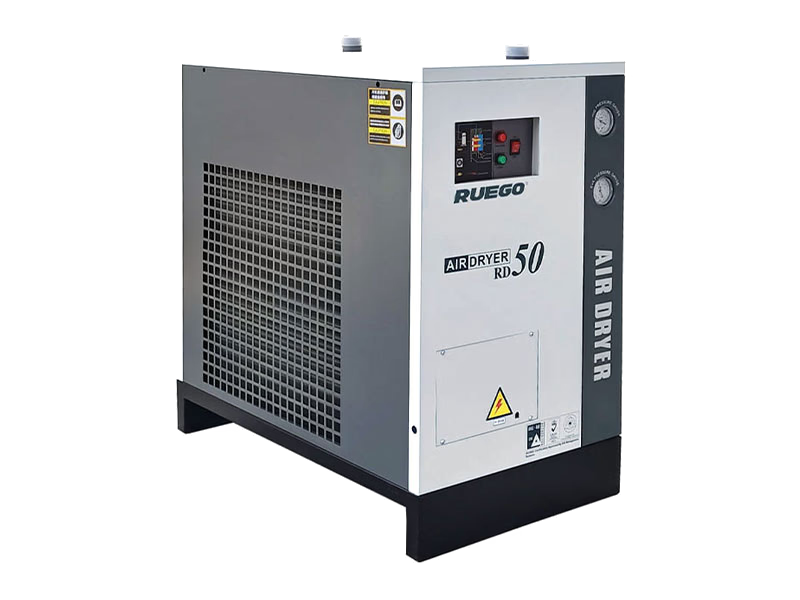
RUEGO RD50A refrigerated air dryer product view

RD Series Refrigerated Air Dryer

RD Series provides air-cooled refrigerated drying for general industrial compressed air systems. Fifteen standard models cover 1-65 Nmยณ/min, with 6-10 bar working pressure, up to 60ยฐC inlet-air temperature and a 2-10ยฐC pressure dew point.

Airflow

1-65 Nmยณ/min

Pressure

6-10 bar

Pressure dew point

2โ€“10ยฐC

Inlet temperature

โ‰ค60ยฐC

View Product
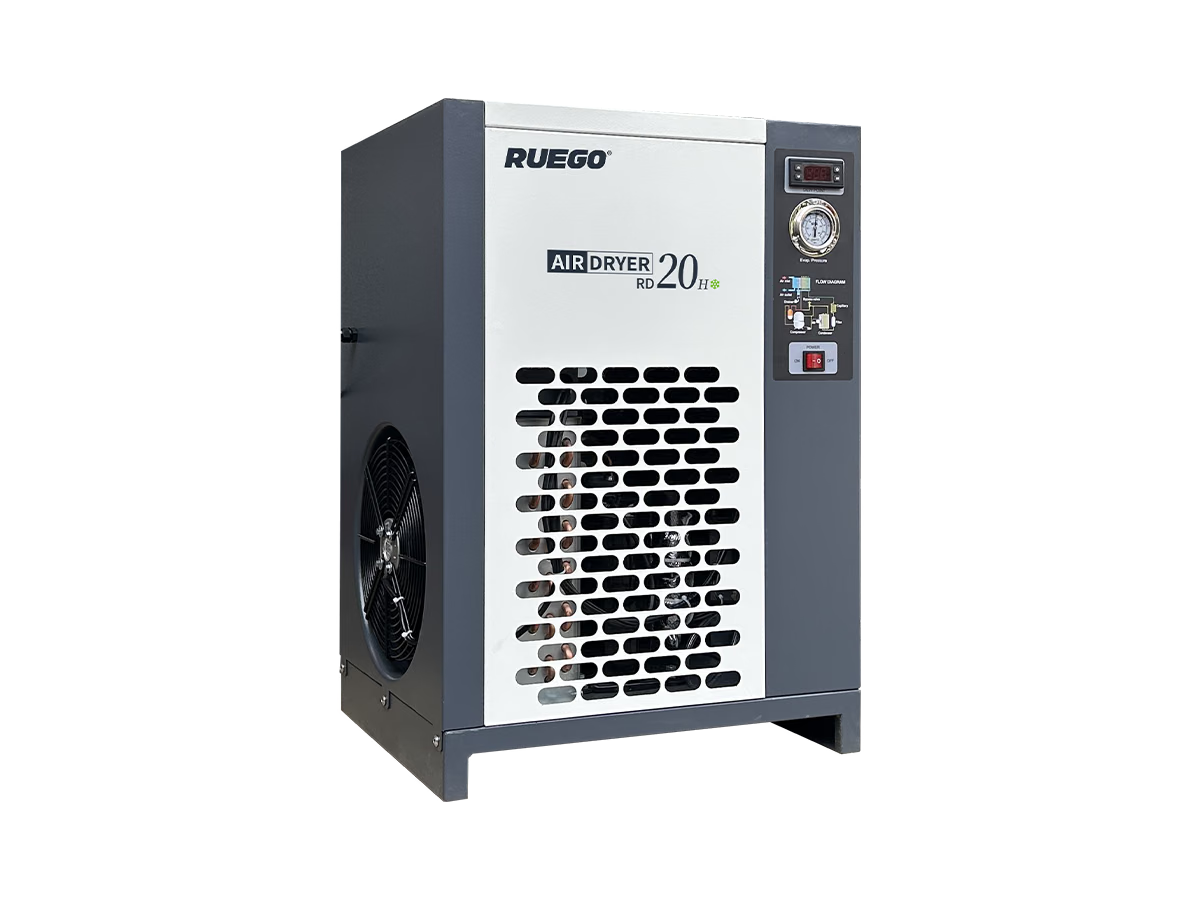
RUEGO RD-20H plate-fin refrigerated air dryer showing the front control panel and side cooling fan

RD-H Series Plate-Fin Refrigerated Air Dryer

Air-cooled refrigerated air dryers with a brazed aluminum plate-fin heat exchanger, fixed-speed refrigeration with hot gas bypass control, and automatic condensate drainage. Choose from 21 models with listed flows of 0.6โ€“150 mยณ/min and a pressure dew point range of 2โ€“10ยฐC.

Airflow

0.6โ€“150 mยณ/min

Pressure

Min. 6 / Max. 16 bar

Pressure dew point

2โ€“10ยฐC

Inlet temperature

Norm. โ‰ค42ยฐC / Max. 70ยฐC

View Product
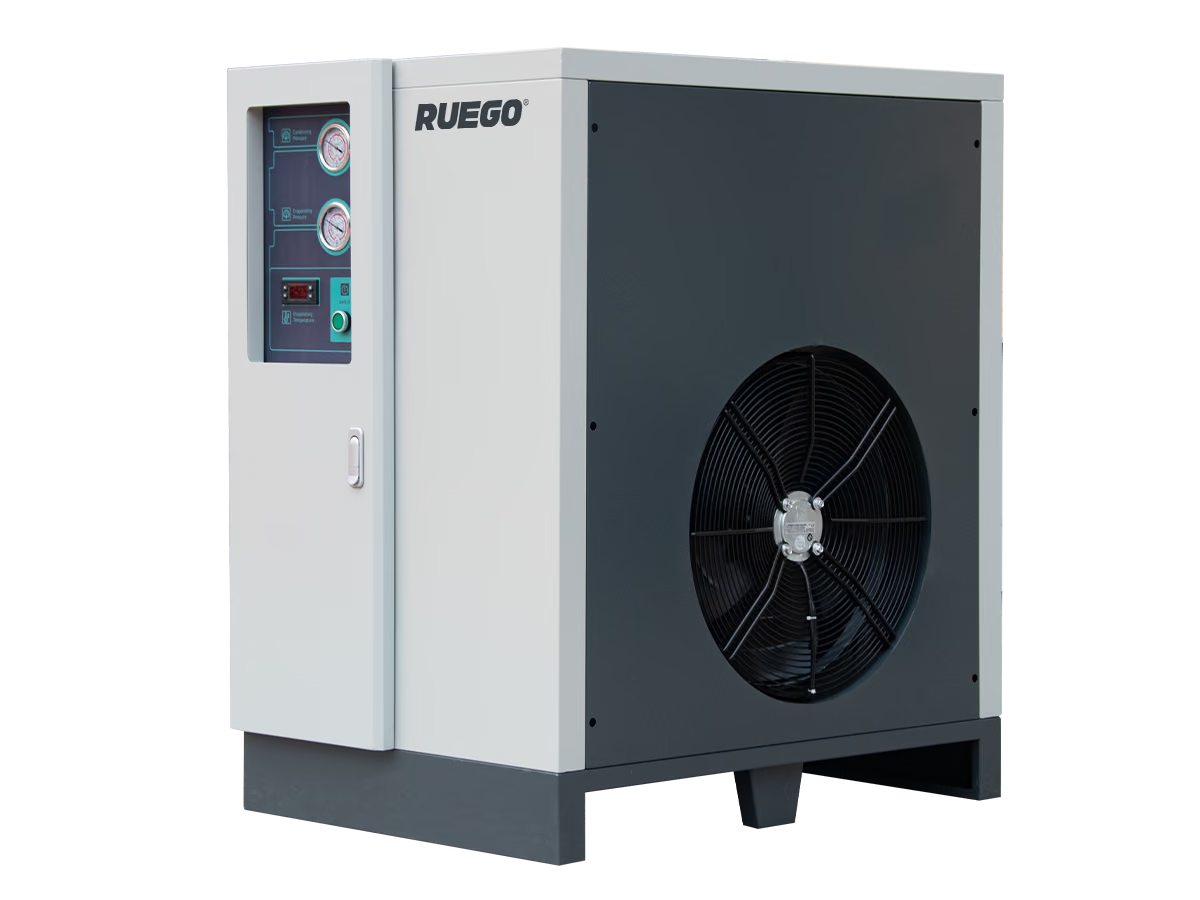
RUEGO DS115V refrigerated air dryer, three-quarter view showing the control panel and side cooling fan

DS-V Series Refrigerated Air Dryer

Air-cooled refrigerated air dryers with integrated aluminum plate-fin heat exchange and fixed-speed refrigeration with hot gas bypass control. Choose from 13 models rated at 1โ€“45 mยณ/min, with a pressure dew point of 2โ€“10ยฐC.

Airflow

1โ€“45 mยณ/min

Pressure

7โ€“16 bar, model dependent

Pressure dew point

2โ€“10ยฐC

Inlet temperature

โ‰ค50ยฐC

View Product
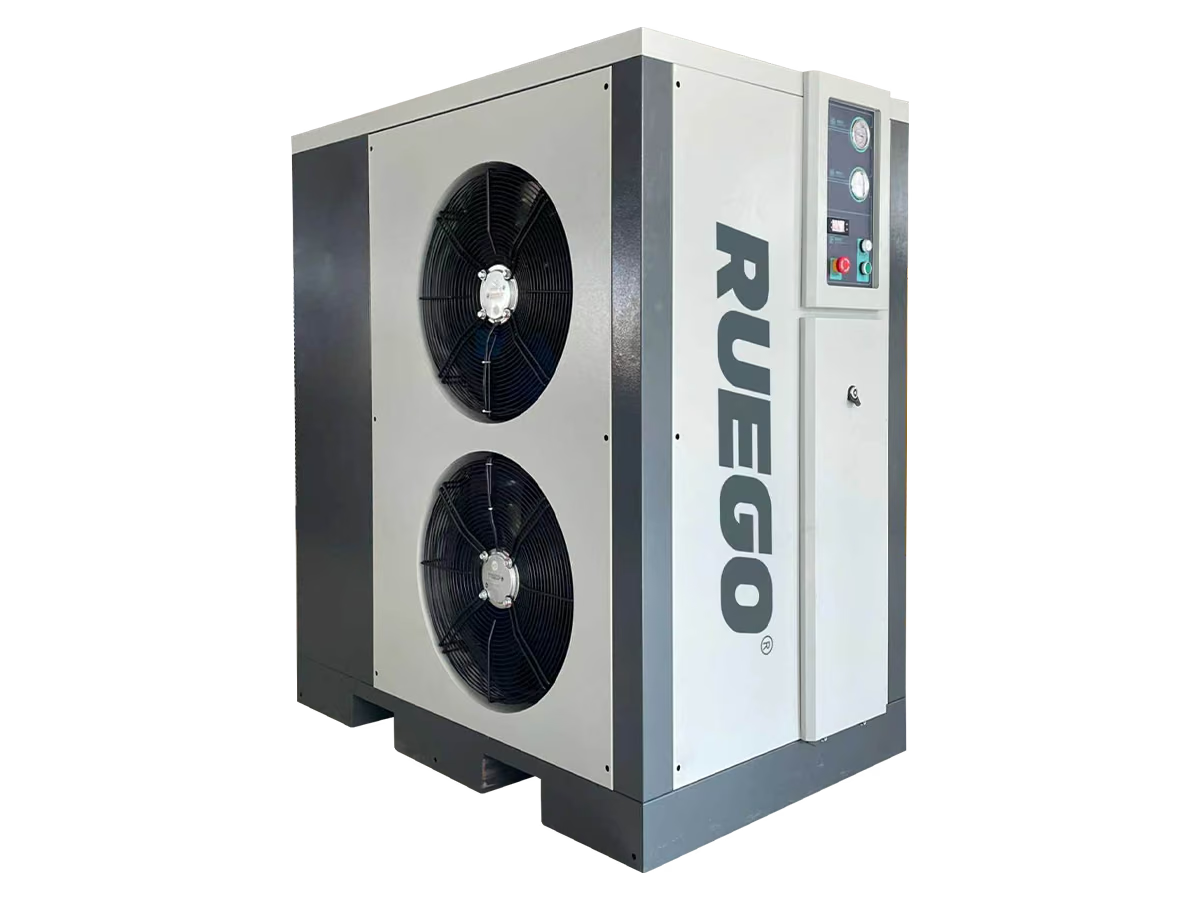
RUEGO DS350VH refrigerated air dryer, front three-quarter view showing twin cooling fans and the control panel

DS-VH Series High-Inlet-Temperature Refrigerated Air Dryer

The RUEGO DS-VH Series handles compressed air with inlet temperatures up to 65ยฐC. Eighteen air-cooled models operate at 7โ€“13 bar with a nominal pressure dew point of 2โ€“10ยฐC. All models operate in ambient temperatures of 0โ€“38ยฐC.

Airflow

1.2โ€“100 mยณ/min

Pressure

7โ€“13 bar

Pressure dew point

2โ€“10ยฐC

Inlet temperature

โ‰ค65ยฐC

View Product

Compare ratings on the same basis.

Check airflow and reference conditions, working pressure, pressure dew point, inlet and ambient temperature limits, and electrical supply. Include the unit and reference conditions when sharing CFM, SCFM, mยณ/min or Nmยณ/min values.

Complete air treatment

Combine Drying and Filtration for Cleaner Air

A dryer removes water vapor. Filters handle other contaminants, such as dust and oil mist. Choose them together to meet the air quality your tools, machines or process need.

Air treatment concept: refrigerated drying, desiccant drying and filtration.

Start with cooled air and liquid-water removal

Example supply layout with an air receiver before the dryers. Keep the separator and receiver drains working.

Compressor

With aftercooler

Water separator

Drain liquid water

Air receiver

With condensate drain

Pre-filter

Protect downstream equipment

01 / AFTER PRE-FILTRATIONEveryday factory air

For tools and machines that accept an above-freezing pressure dew point, refrigerated drying with suitable filters is often enough.

Refrigerated dryer

Remove water vapor

Process filtration

Match the air quality needed

Air to equipment

Tools and machines

02 / AFTER PRE-FILTRATIONLower dew point needs

Choose desiccant drying when the process needs a lower pressure dew point or air lines face freezing temperatures. The route below shows where refrigerated pretreatment can fit.

Refrigerated pre-dryer

Optional pretreatment

Coalescing filter

Catch oil mist and droplets

Desiccant dryer

Reach a lower dew point

Particle afterfilter

Catch desiccant dust

Final treatment

Match the process

Air to equipment

Point of use

A refrigerated pre-dryer reduces the water load on the desiccant stage. Pair it with a desiccant dryer designed for pre-dried air, with suitable desiccant media and controls.


Set the quality at the point of use

Particles

Water

Oil

ISO 8573-1 defines separate purity classes for particles, water and oil. Set the required class for each, then verify the air where it is used. Food handling, precision electronics and pharmaceutical production should follow their process-specific air quality requirements.

Choose filters by what they remove

Oil mist and droplets:

Coalescing filters protect the desiccant.

Oil vapor:

Add activated carbon when the process requires oil-vapor removal.

Microbes:

Use a sterilizing-grade point-of-use filter for aseptic processes.

ISO 8573-1:2010 classifies air purity; it does not prescribe one equipment layout for every industry.

US food manufacturing: 21 CFR 117.40(g) requires treatment of air introduced into food or used to clean food-contact surfaces to prevent contamination by unlawful indirect food additives. It does not set a universal dryer type or pressure dew point.

EU GMP Annex 1, sections 6.18โ€“6.19 calls for defined chemical, particle and microbial quality for product-contact gases. Aseptic process gases need sterilizing-grade filtration at the point of use, with appropriate filter integrity testing and microbial monitoring.

Discuss Your Air Treatment Setup โ†’

Tell us about your system

Need a Compressed Air Dryer Quote?

Tell us your application, airflow and working pressure. Add the target dew point, temperatures and electrical supply where known, and we can review the dryer type and configuration for your project.

Not sure which dryer you need?

Describe where the air is used and what you want to improve. You can start the conversation before every technical parameter is known.

Before you inquire

Compressed Air Dryer Questions

A few practical answers before you choose a technology or share your system details.

Do I need a dryer for my air compressor?

That depends on how dry the process needs the air to be. Cooling and liquid separation remove condensed water, but additional drying may be needed to control the remaining water vapor.

Start with the required pressure dew point and the lowest downstream temperature. Refrigerated drying serves suitable above-freezing dew point requirements. Desiccant drying addresses lower dew point needs, with regeneration selected for the system.

Use maximum airflow with its reference conditions, working pressure, inlet and ambient temperatures, and the required dew point. Confirm capacity using the selected model's rating and correction data, rather than compressor power alone.

Check your process specification and downstream conditions. If the requirement is not known, share the application, air-using equipment and lowest expected pipework temperature for review.

No. Drying controls water vapor; filters address specific contaminants such as particles or oil aerosols. The filter types and grades should match the dryer and the process requirements.

Start with the application, flow and unit, working pressure and destination. Add temperatures, target dew point, electrical supply and quantity where known. The selected technology, size and configuration determine the quotation.

Provide the dryer series or model when requesting technical information. Installation requirements and maintenance procedures should be checked against the documentation for that equipment.

OEM & project procurement

Dryer Supply for OEM and Project Buyers

Share your application, quantity and delivery market when requesting a quote. The dryer type, capacity and configuration shape the offer. For OEM or distributor projects, include branding, documentation and electrical requirements so available options can be reviewed for the selected series.

Discuss Your Dryer Requirements

Site conditions

Flow, pressure, temperature

Electrical supply

Voltage, phase, frequency

Project scope

Quantity, installation, destination

OEM requirements

Branding and documentation

Scroll to Top

Request a Quote

Tell us which products you need and your requirements. Our team will help with selection and prepare a quotation.

Include the product or model, quantity, application and any specifications you know.

Dryer selection support

Tell Us About Your Dryer Requirements

Share your application and operating conditions so we can review a suitable dryer for your project.

Application, airflow and unit, pressure, inlet / ambient temperature, target dew point, power supply or quantity, where known.

Sending your inquiryโ€ฆ

Thank you. Your dryer requirements have been sent.

Get Screw Compressor Selection Support

Share what you know. If youโ€™re unsure about pressure or airflow, tell us what equipment you use and weโ€™ll help with selection.

Only name and email are required.

Add Technical Details (optional)

Sending your inquiryโ€ฆ

Thank you. Your request has been sent. RUEGO will follow up by email to help with compressor selection.