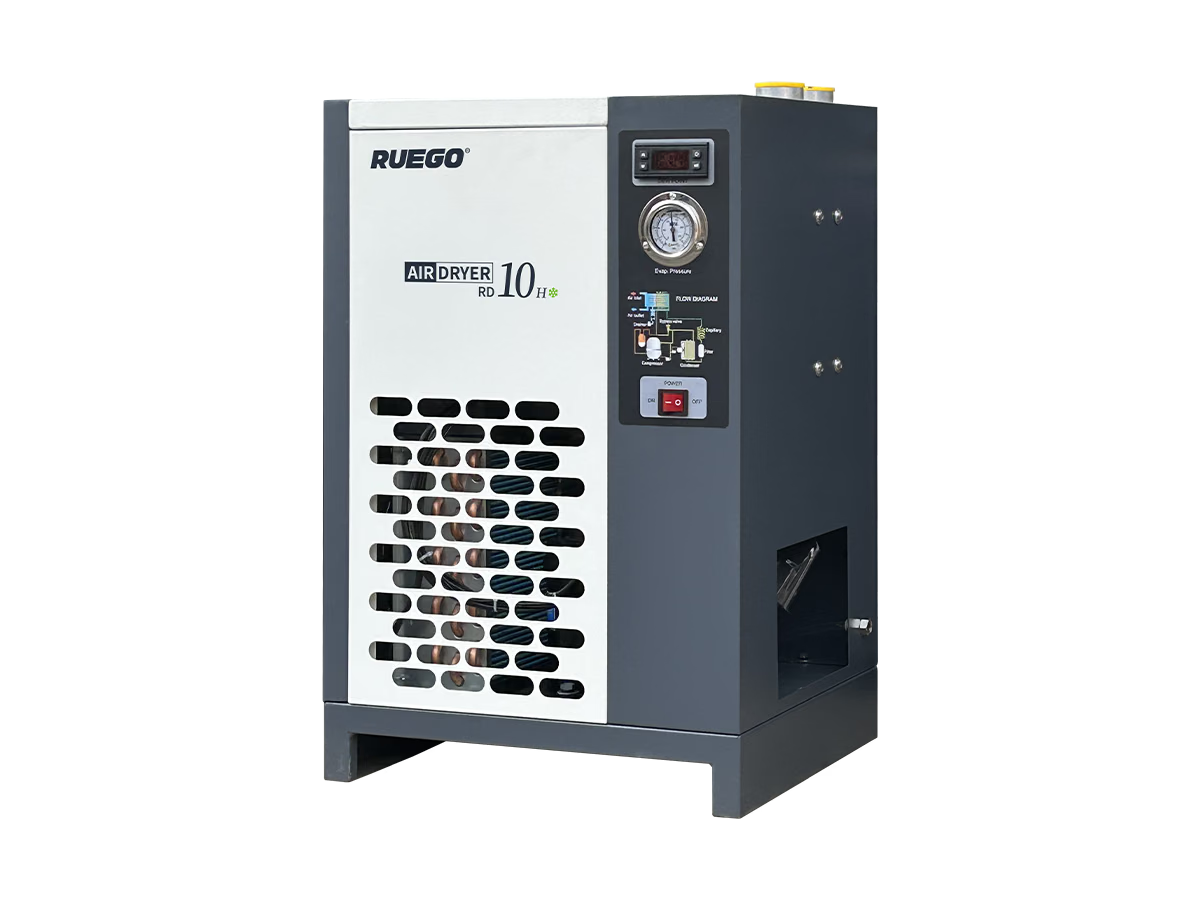
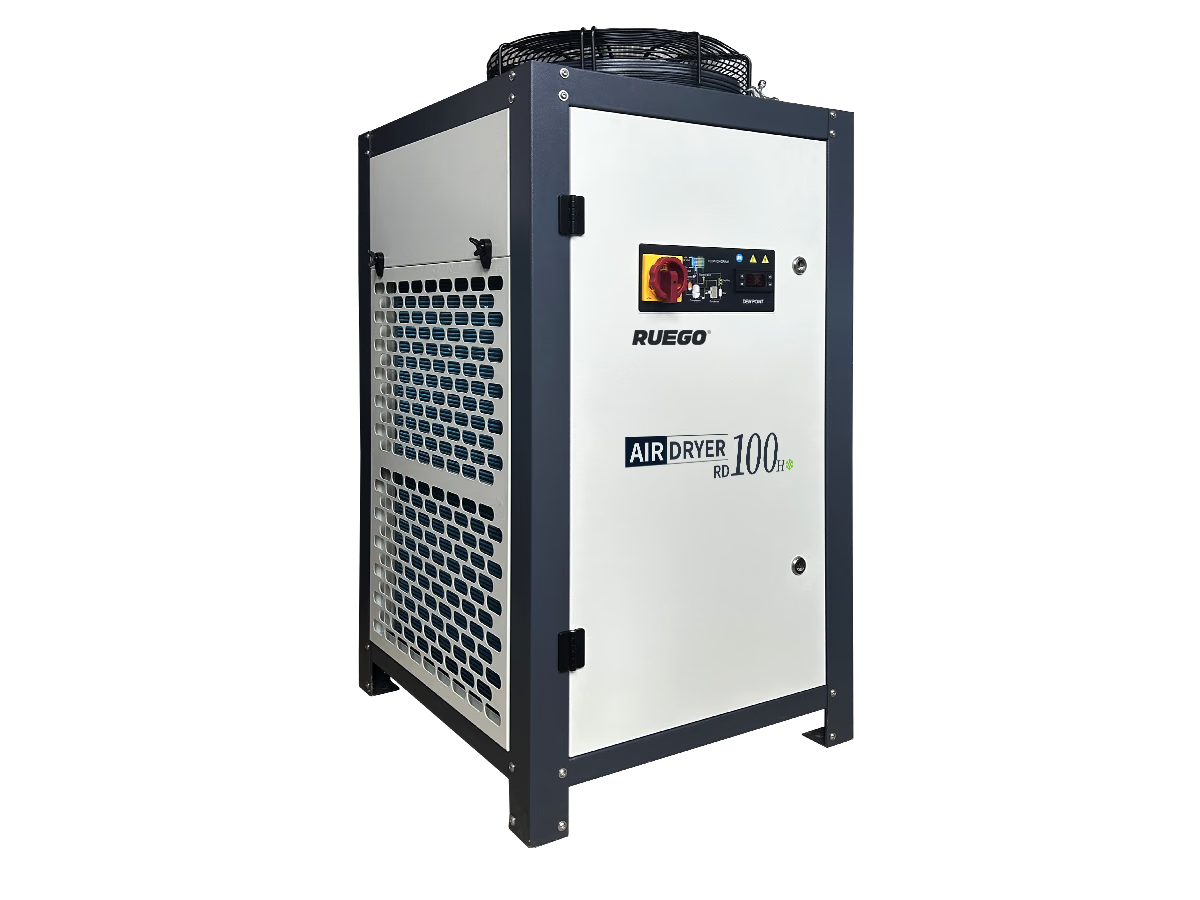
RD-H series overview
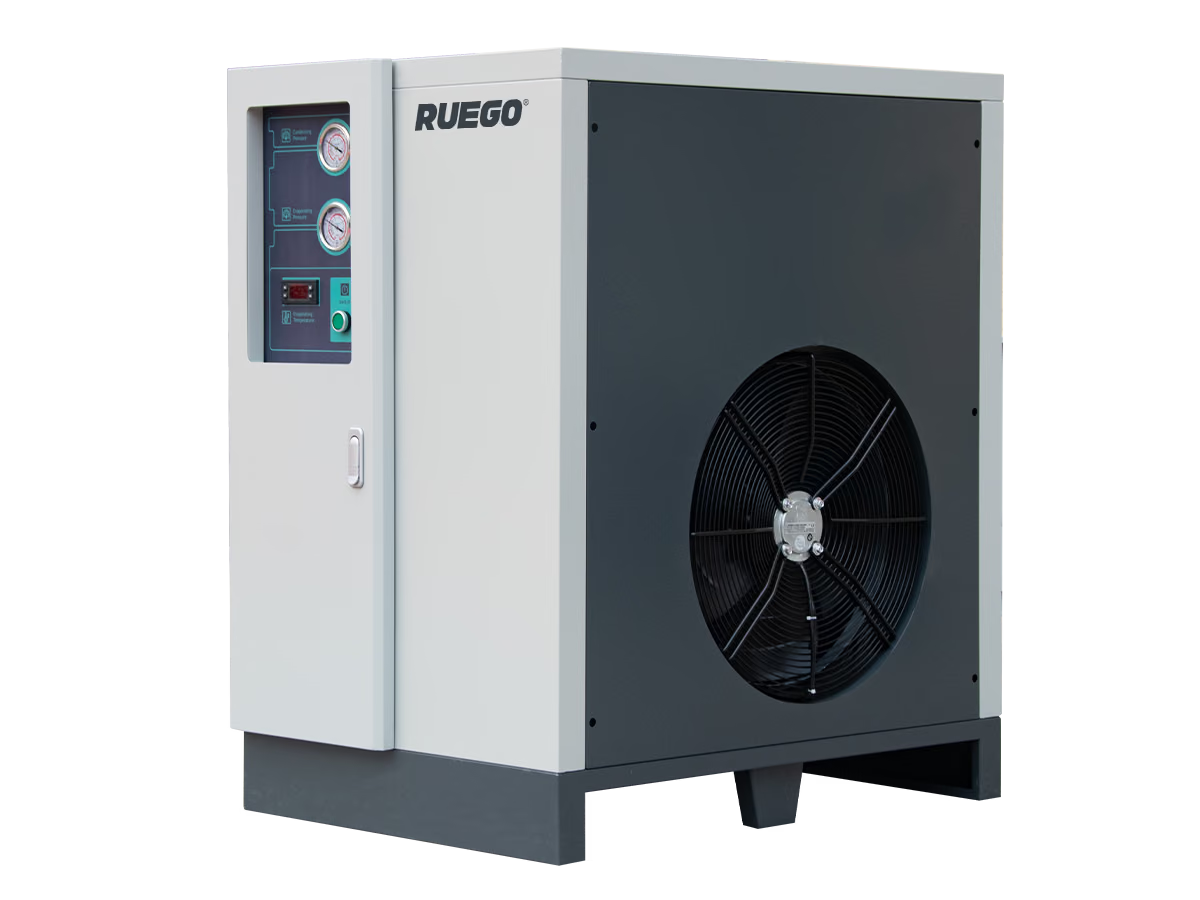
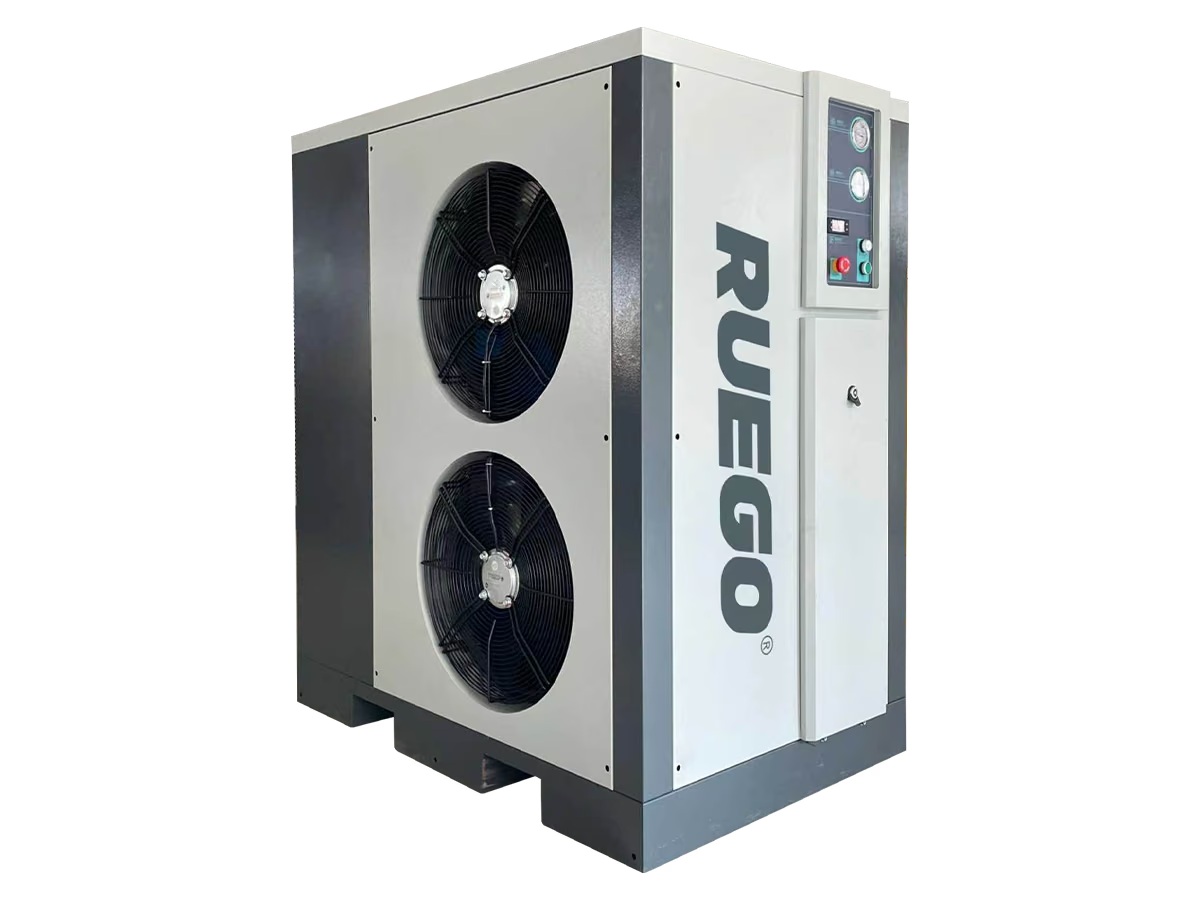
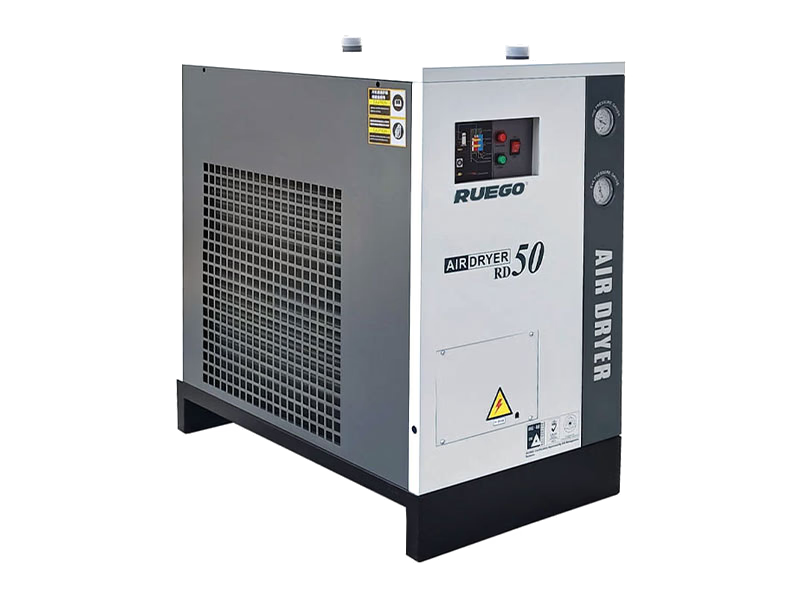
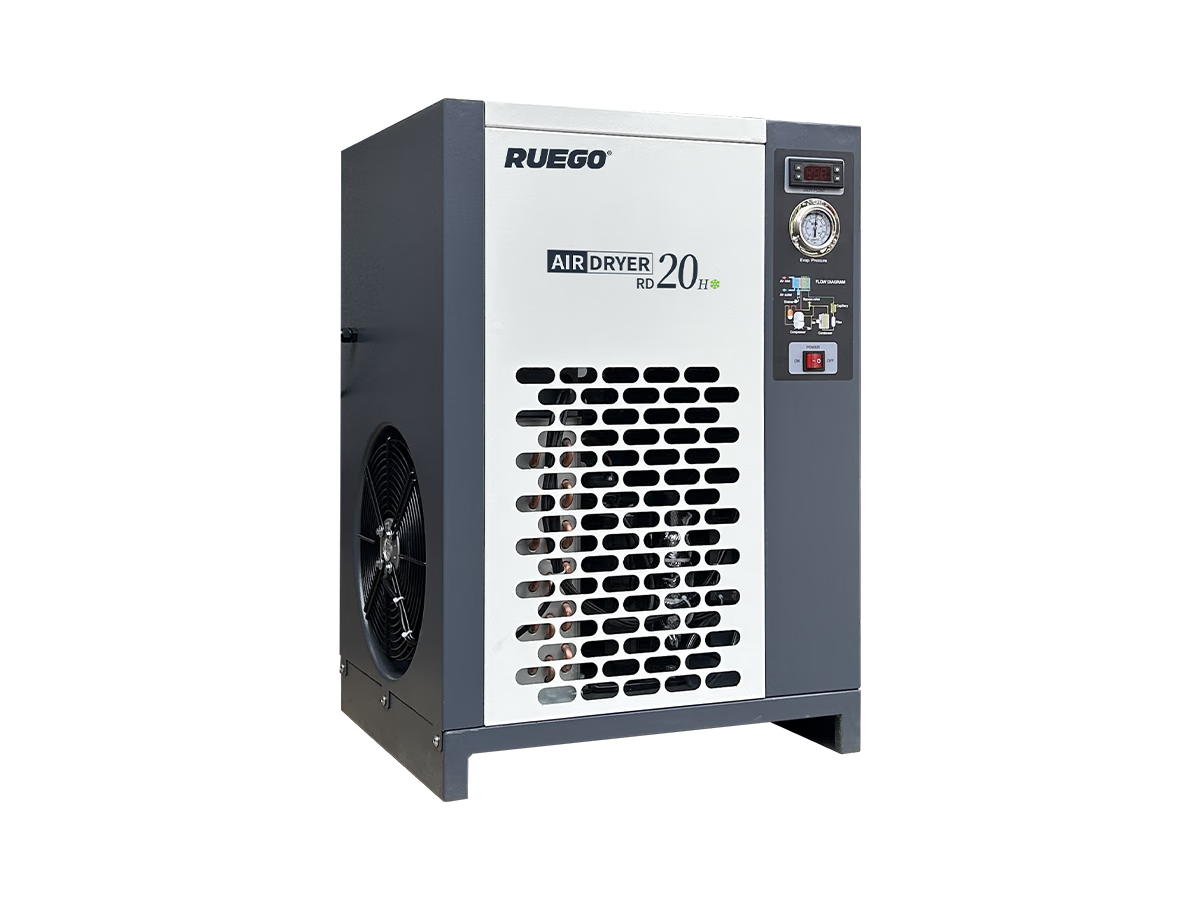
The RUEGO RD-H Series Plate-Fin Refrigerated Air Dryer removes moisture from industrial compressed air. Its brazed aluminum plate-fin heat exchanger combines pre-cooling and refrigerated cooling in a compact assembly, followed by water separation and outlet air rewarming.
The air-cooled range includes 21 models, from RD-5H to RD-1067H, with listed flows of 0.6–150 m³/min and a pressure dew point range of 2–10°C. Choose a model against your actual inlet conditions and required air quality.
RD-H is a separate product line from the shell-and-tube RD series. To assess the available designs, compare refrigerated air dryer options.
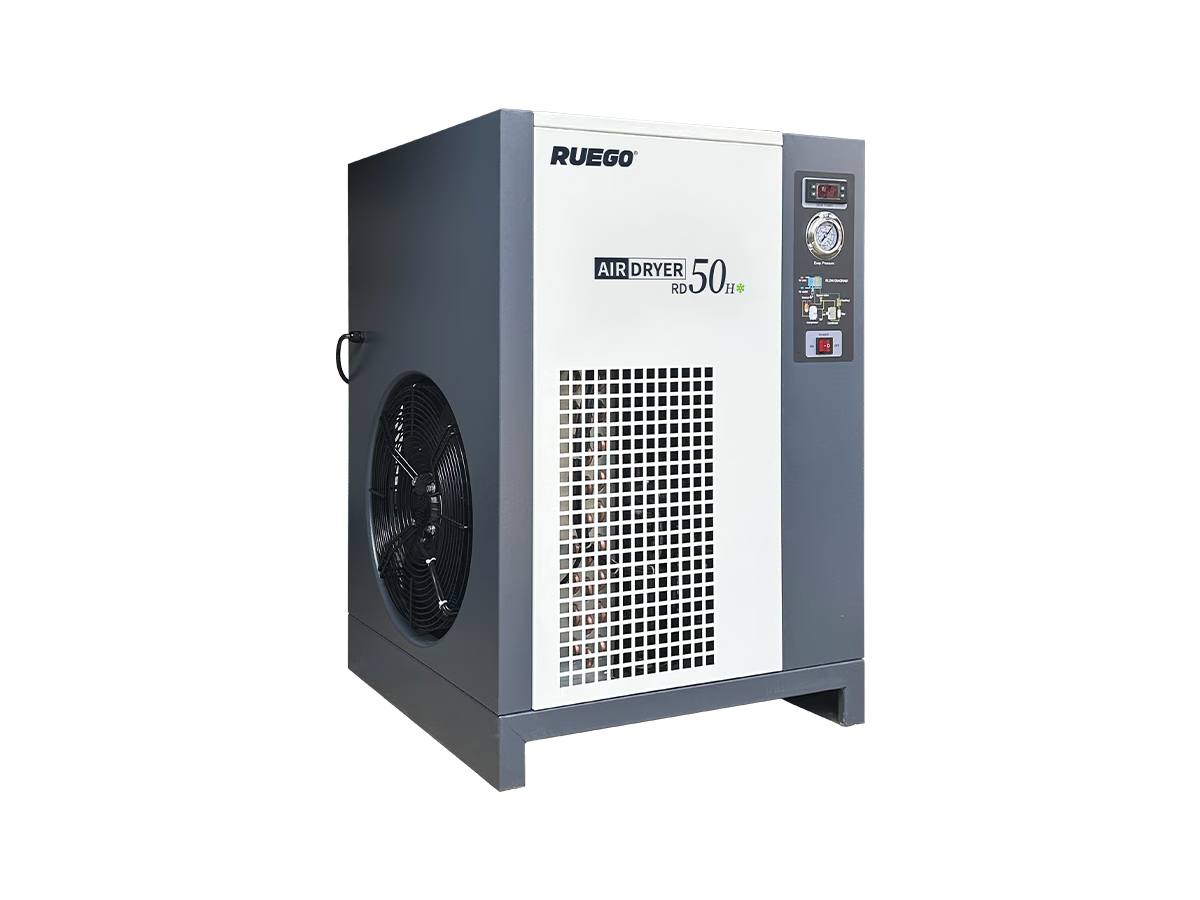
How the plate-fin heat exchanger works
RD-H uses a brazed aluminum plate-fin heat exchanger. Incoming warm air and outgoing cold, dried air exchange heat as part of a four-stage moisture-removal process.
01
Pre-cooling
Warm, moist compressed air transfers heat to the outgoing cold air before refrigerated cooling.
02
Refrigerated cooling
Further cooling causes water vapor in the compressed air to condense into liquid water.
03
Water separation
The separator removes condensed water from the air stream for discharge from the dryer.
04
Outlet rewarming
The cold, dried air absorbs heat from the incoming air before flowing downstream.
Rewarming raises the outlet air temperature without removing more water vapor. Pressure dew point is the temperature at which moisture begins to condense at the stated pressure. Downstream air must remain above that dew point at the corresponding pressure to avoid further condensation.
Refrigeration control and condensate removal
Fixed-speed refrigeration
RD-H uses a fixed-speed refrigeration compressor with hot gas bypass control. The bypass helps regulate refrigeration conditions as the cooling load changes. Refrigerant type varies by model; use the selected unit’s specifications when planning service.
Automatic condensate drainage
Every RD-H dryer is equipped with an automatic drain to discharge separated condensate. Allow access to the drain for routine inspection and maintenance.
Select the RD-H model for your operating conditions
Match dryer capacity to your peak air demand and site conditions. Use the following temperature limits and operating data to guide model selection.
Normal inlet temperature
≤42°C
The confirmed normal inlet range. Check available capacity against your airflow, pressure and ambient temperature.
Maximum inlet temperature
70°C
The confirmed upper inlet limit. Available capacity at elevated temperatures requires a separate operating-condition check.
- Airflow: Provide your normal and peak air demand, with the flow units and reference conditions.
- Operating pressure: Specify your working pressure range. The minimum is 6 bar, with 16 bar as the upper operating limit.
- Inlet and ambient temperatures: Provide the highest expected air temperature at the dryer inlet and the highest temperature around the dryer, including summer conditions.
- Pressure dew point: Specify the moisture level your process requires as a target pressure dew point.
- Allowable pressure drop: State the maximum pressure loss your system can accommodate across the dryer.
RD-H correction factor tables
Reference values for model selection. Confirm the rating basis, factor combination and intermediate-value rules before calculating capacity.
Inlet temperature
| Inlet temperature (°C) | Correction factor |
|---|---|
| ≤38 | 1.11 |
| ≤42 | 1.04 |
| ≤45 | 0.92 |
| ≤50 | 0.85 |
| ≤55 | 0.70 |
| ≤60 | 0.61 |
| ≤65 | 0.53 |
| ≤70 | 0.46 |
Ambient temperature
| Ambient temperature (°C) | Correction factor |
|---|---|
| ≤20 | 1.16 |
| ≤25 | 1.12 |
| ≤30 | 1.08 |
| ≤35 | 1.05 |
| ≤38 | 1.0 |
| ≤40 | 0.98 |
| ≤45 | 0.80 |
| ≤50 | 0.76 |
Operating pressure
| Inlet pressure (bar) | Correction factor |
|---|---|
| 4 | 0.77 |
| 5 | 0.86 |
| 6 | 0.95 |
| 7 | 1.05 |
| 8 | 1.14 |
| 10 | 1.21 |
| 12 | 1.23 |
| 14 | 1.27 |
Dew point
| Dew point (°C) | Correction factor |
|---|---|
| 3 | 1.00 |
| 5 | 1.09 |
| 7 | 1.19 |
| 10 | 1.37 |
Where the RD-H series fits
Industrial moisture control
Consider RD-H where the required pressure dew point is within its 2–10°C range. Check the lowest temperature the downstream piping and equipment will encounter, including overnight and winter conditions.
Limited installation space
The integrated heat exchanger keeps the assembly compact. Compare actual cabinet dimensions and leave additional room for ventilation, connections and service access.
Hot inlet conditions
Higher inlet temperatures increase the cooling duty and can increase the moisture load. Assess the actual temperature, pressure and flow together before selecting a model for hot inlet service.
If downstream conditions or the process require a sub-zero pressure dew point, assess desiccant air dryers. Specify particle and oil limits separately from moisture requirements; a dryer’s dew point does not establish complete compressed-air purity.
Installation and project requirements
Space and connections
Use the selected model’s length × width × height (L×W×H) when checking the layout. Confirm the DN connection size, thread or flange standard, drainage route and service clearance. Include ambient temperature and ventilation in the installation review.
Power and project options
Standard models use 50 Hz power: 220 V single-phase through RD-100H and 380 V three-phase from RD-120H. RD-H supports project-based customization. Confirm the required voltage, frequency and configuration before placing an order.
Coordinate the dryer with the project’s compressed air filtration, storage and drainage requirements. The final arrangement depends on flow, air quality and maintenance access.